
Skip to content
On Vole Animal Assistance

Assistance dogs

Every assistance dog has a unique role.

Through specialized training, these dogs learn practical skills that help their handlers navigate daily life with greater independence, confidence and safety.

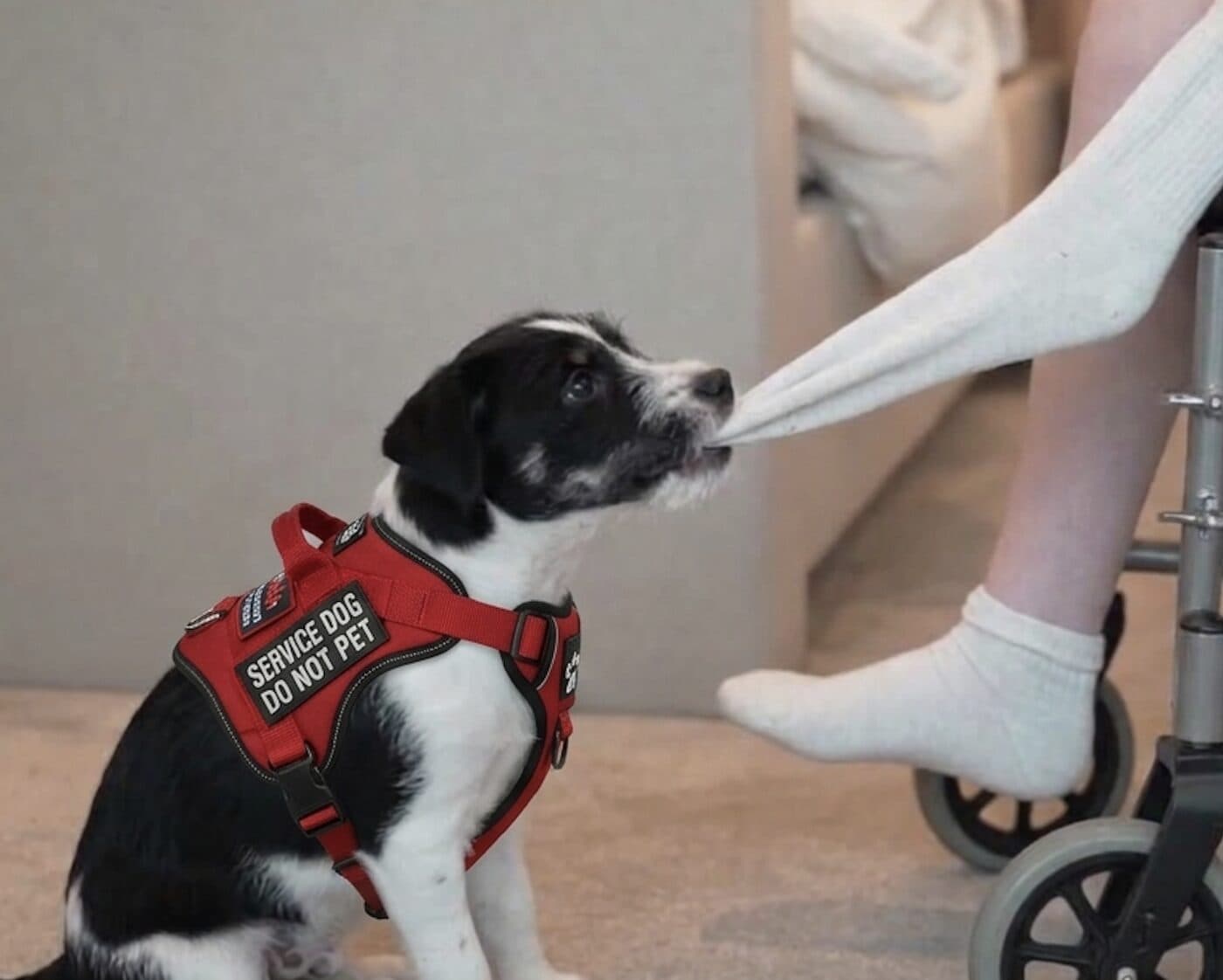
Frijol, a black and white puppy in a service vest, pulling a sock off the foot of a wheelchair user

FrijolHelping with a sock

Assistance dogs are trained to perform specific tasks related to an individual's needs. Their role goes beyond companionship, providing practical support that can make everyday activities more accessible.

GD

Guide Dogs

Guide dogs assist people who are blind or visually impaired by helping them navigate their surroundings and move safely through different environments. They are trained to recognize obstacles, changes in elevation, curbs and pedestrian crossings.

How they help

  • Guide their handlers around obstacles and along familiar or unfamiliar routes.
  • Help locate entrances, doors, pedestrian crossings and other important features.
  • Support safer travel on public transportation and through shopping centers and public buildings.
  • Encourage independence, confidence and greater participation in everyday activities.

Guide dogs also offer companionship and can help facilitate positive social interactions. However, a dog providing comfort or protection alone does not qualify as a guide dog.

HA

Hearing Assistance Dogs

Hearing assistance dogs support people who are deaf or hard of hearing by identifying specific sounds and alerting their handlers to them. Their training helps individuals become more aware of important auditory information in their environment.

How they help

  • Alert their handlers to doorbells, knocking, telephone rings, alarms and timers.
  • Respond to a smoke alarm or other important warning sounds.
  • Recognize when someone calls their handler's name or when a baby cries, when included in their training.
  • Make physical contact with their handler and guide them toward the source of a sound.

Hearing assistance dogs can help their handlers feel more aware of their surroundings and manage everyday situations with greater confidence.

SD

Service Dogs

Service dogs assist individuals with disabilities other than blindness or hearing loss by performing specific tasks directly related to their handlers' needs. Their training may address physical, neurological, medical, developmental or psychiatric disabilities.

Depending on the individual and the dog's specialized training, service dogs may assist with mobility, medical response, daily activities or disability-related challenges.

How they help

  • Retrieve dropped objects and essential personal items.
  • Open accessible doors, operate adapted switches or perform other trained household tasks.
  • Assist with certain mobility-related tasks, including retrieving items and operating specialized equipment.
  • Alert to specific medical cues or respond during a medical emergency.
  • Activate an emergency alert device or seek assistance when needed.
  • Perform trained tasks that support individuals with autism or psychiatric disabilities.
  • Provide trained balance or counterbalance assistance when appropriate and safe for the dog.

Service dogs must be trained to perform disability-related tasks. Their responsibilities vary according to the needs of their handlers and the skills they have developed.

MA

Mobility Assistance Dogs

Trained to assist people with physical disabilities, these dogs may retrieve objects, open accessible doors, operate adapted devices or perform other tasks that support everyday independence. Any balance or weight-bearing work must be appropriate for the dog's size, health and training.

MD

Medical Alert Dogs

These dogs are trained to recognize specific cues associated with certain medical conditions and alert their handlers to potential concerns. Their abilities depend on the condition and the individual dog's training.

DA

Diabetic Alert Dogs

Diabetic alert dogs are trained to detect particular scent changes that may be associated with fluctuations in blood glucose levels. They alert their handlers so they can check their glucose levels and follow their medical care plan.

SR

Seizure Response Dogs

These dogs are trained to assist during or after a seizure by performing tasks such as retrieving a phone, activating an alert device, seeking help or helping their handler remain safe.

PS

Psychiatric Service Dogs

Psychiatric service dogs assist individuals with psychiatric disabilities by performing specific trained tasks. These may include interrupting distress-related behaviors, helping their handlers navigate difficult situations or guiding them toward a designated safe location.

PT

PTSD Assistance Dogs

Trained to support individuals living with post-traumatic stress disorder, these dogs may perform tasks such as interrupting distress-related behaviors, assisting with environmental awareness or helping their handlers follow established routines during difficult situations.

AU

Autism Assistance Dogs

Autism assistance dogs support individuals on the autism spectrum through tasks tailored to their needs. Depending on their training, they may assist with routines, transitions, recognizing specific situations or managing certain challenging environments.

AL

Allergy Detection Dogs

Allergy detection dogs are trained to recognize specific allergens and alert their handlers to their potential presence. This specialized training can provide an additional source of awareness for individuals who must carefully manage severe allergies.

How they help

  • Identify trained target allergens in particular environments or materials.
  • Alert their handler when a target scent is detected.
  • Support established allergy-management practices by providing an additional warning system.

These dogs do not replace medical precautions, allergen testing or emergency treatment.

Take the first step toward greater independence.

We help individuals explore the possibility of partnering with a trained assistance dog. Our application process allows us to understand your needs and identify the most suitable path forward.

Apply for an assistance dog